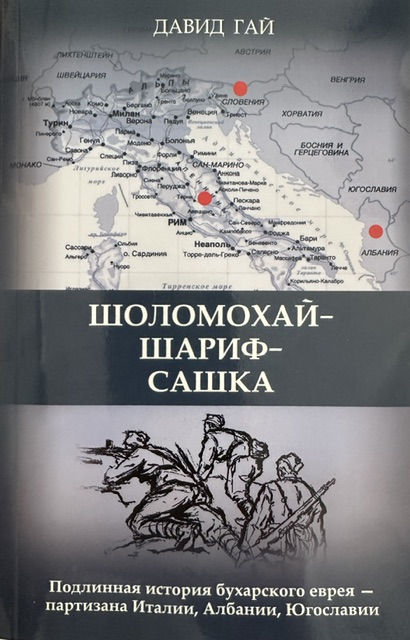
Memory Returned to a Human Being
On David Gai's book "Sholomokhai — Sharif — Sashka"
There are lives that could never be invented. Any writer who dared to compose such a plot would risk being told: this simply does not happen. Yet the story of Sholomokhai Zavurov is exactly of that kind. It seems improbable precisely because it is true.
At the Eleventh Scientific Conference of Bukharian Jews, held on May 24–25, 2026, in New York, a man approached me in the corridors and handed me a small book. Back in Vienna, I read it with great interest. It turned out to be quite short — around 130 pages. But already after the first chapters I felt, above all, an urge to thank the author for his enormous labor in restoring the life of a man about whom, until very recently, almost nothing had been known.
There are books one reads for the plot. There are books that broaden our historical knowledge. And there are books that give people back their own biography, wresting it from oblivion. It is to this last category that David Gai's documentary novella "Sholomokhai — Sharif — Sashka" belongs.
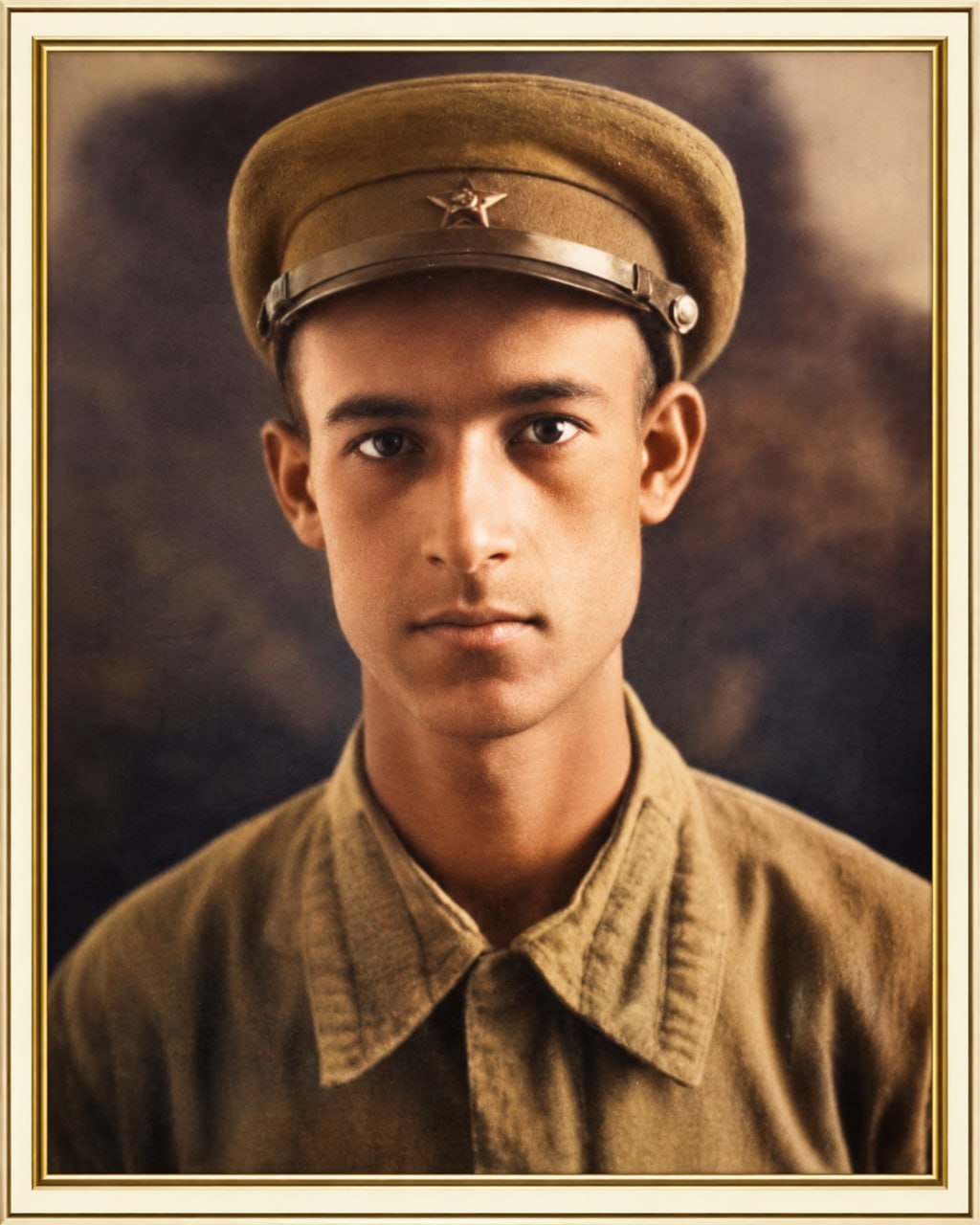
The reader is led through the astonishing fate of a Bukharian Jew, Sholomokhai Zavurov — a man to whom the war more than once left only the slenderest chance of survival.
In 1939 he was called up for compulsory service in the Red Army. Having served his term, the schoolteacher was already on his way home. It was the summer of 1941. The train had almost reached his native Shakhrisabz when the troop convoy was unexpectedly turned back. The Great Patriotic War had begun.
Sholomokhai found himself in a signal battalion, was trained as a line signalman, and was promoted to sergeant. Soon his unit was surrounded and then taken into German captivity. He understood perfectly well: to admit his Jewish origin meant certain death. And so he made a desperate decision — he became the Tajik Sharif Zairov, taking the name of a fellow soldier whom he would never meet again. This step saved his life, but at the same time turned all his subsequent existence into one continuous ordeal.
 Captivity, a concentration camp, escape, participation in the Italian, Albanian and Yugoslav partisan movements, three severe wounds, Victory won far from home, the return to the Soviet Union, endless interrogations by SMERSH and the state security organs — a single such biography would have been enough for an adventure novel.
But David Gai did something far more important. He brought back from oblivion a man whom history had nearly lost. A modest frontline soldier, a signalman, a prisoner of war, a partisan of three countries, a man who survived the Holocaust only because at the decisive moment he called himself by another's name, lived a long life and told almost no one of what he had endured. Such people did not like to speak of themselves. They believed they had simply done their duty. That is why the author deliberately avoids literary flourishes. He trusts documents, facts, and human memory. And that is precisely why the book makes so powerful an impression.
The author achieves considerably more than the biography of one frontline soldier. He returns the reader to the very atmosphere of the war, expanding the narrative with historical digressions. Once again we learn about the work of frontline signalmen, about the arrangement of field telephone communications, about German reconnaissance aircraft, about the daily life of soldiers, about the price at which the command of troops was ensured. These historical asides help us to understand more deeply the world in which the protagonist lived and fought.
At times such explanations become so numerous that the reader longs to return more quickly to the fate of Sholomokhai himself. But this is rather a feature of the author's manner than a shortcoming of the book. David Gai seems to strive to show not only the man at war, but the war itself — in all its complexity, cruelty, and everyday reality.
Especially valuable are the pages that reveal the character of the hero. He does not appear as a man who performs feats for the sake of glory. On the contrary, he is marked by a rare integrity, an inner dignity, and a sense of justice.
One of the most striking episodes concerns Sholomokhai's platoon commander refusing to accept, on his own, an award for a downed German aircraft. He insisted that the fate of the award be decided by lot among all the soldiers who had fired at the plane. This small episode says far more about the man than any authorial description could.
No less powerful is the impression made by the hero's postwar life. Having passed through captivity and the partisan struggle, he lived for many years with the fear that his past could once again turn into an accusation. Like thousands of Soviet prisoners of war, he did not feel truly free even after the Victory. Perhaps that is why he almost never spoke of what he had endured — not even to his own children.
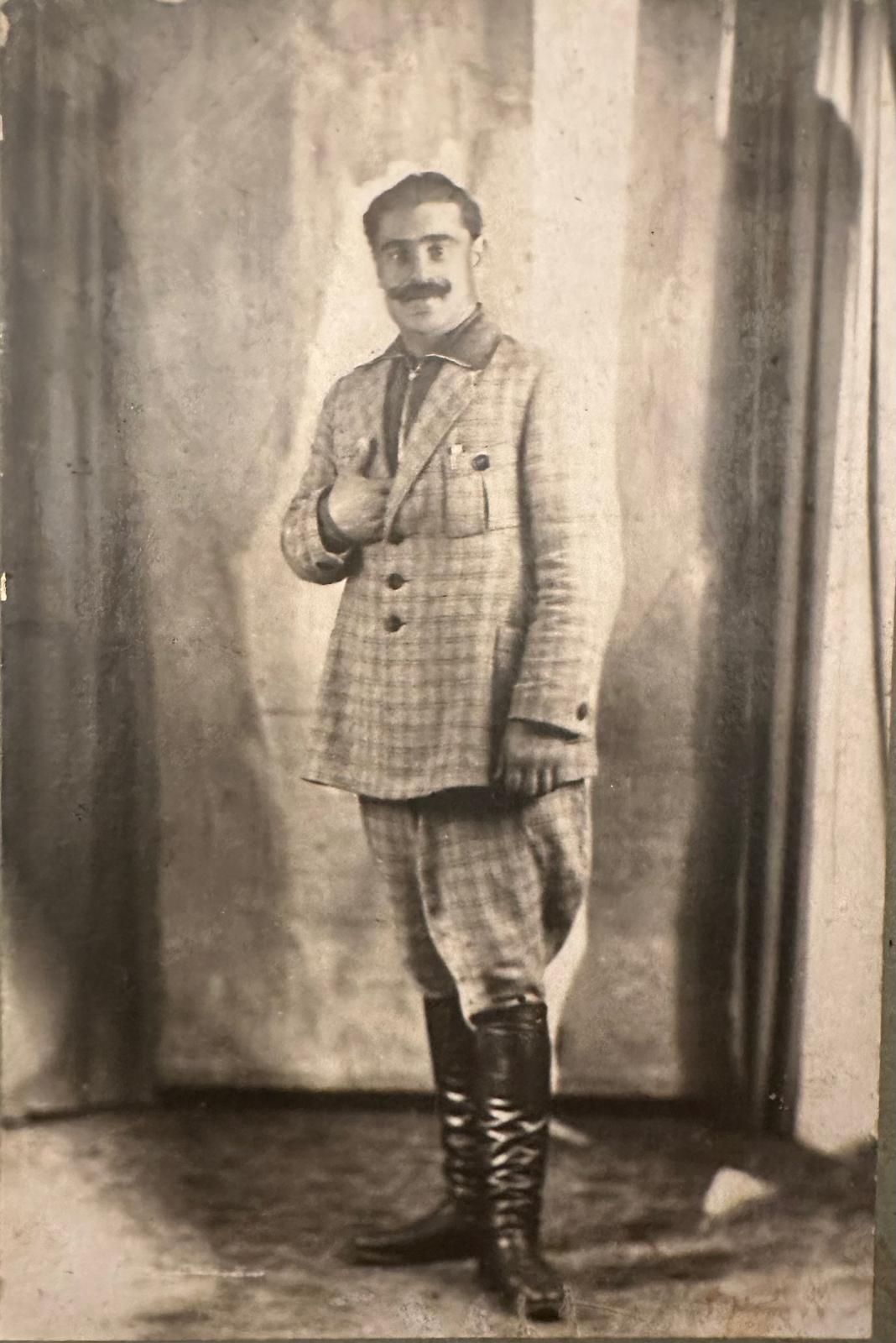
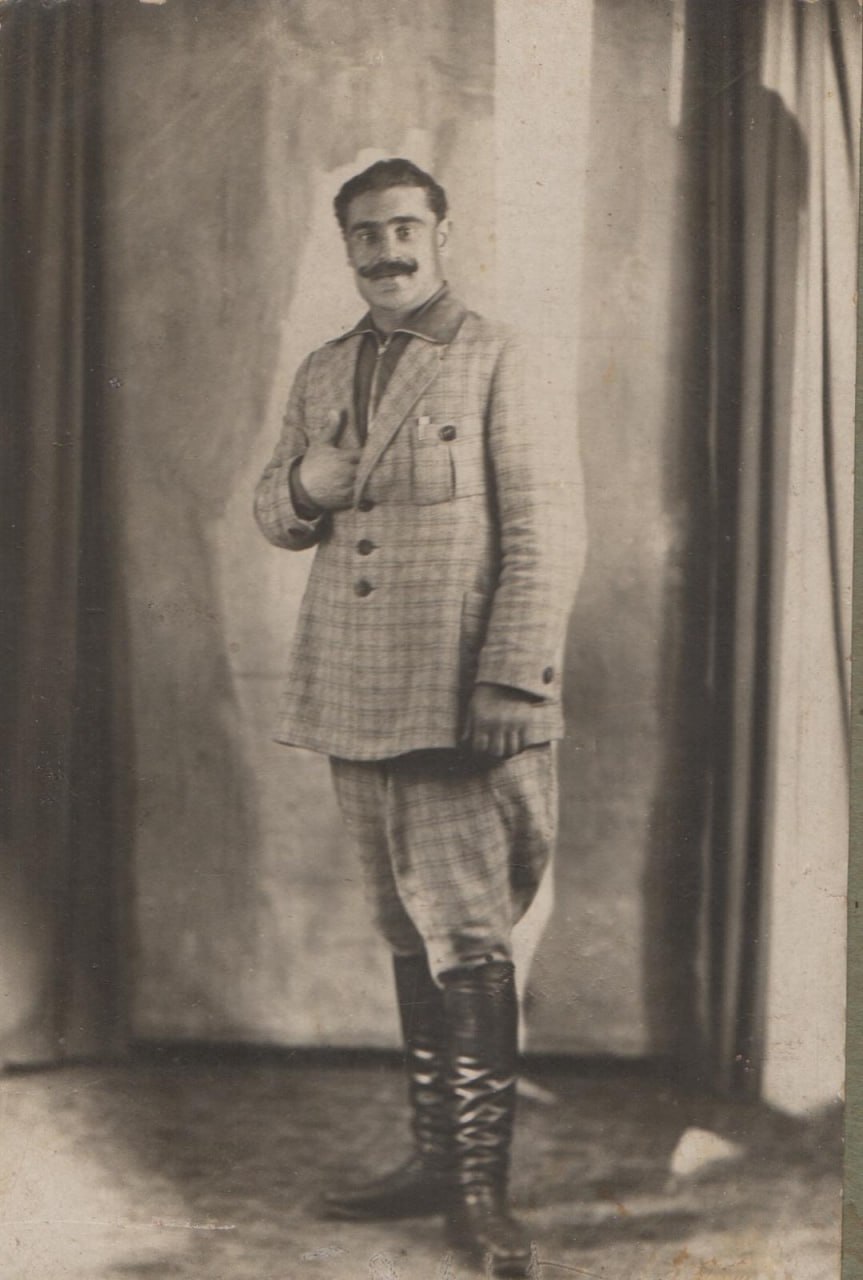
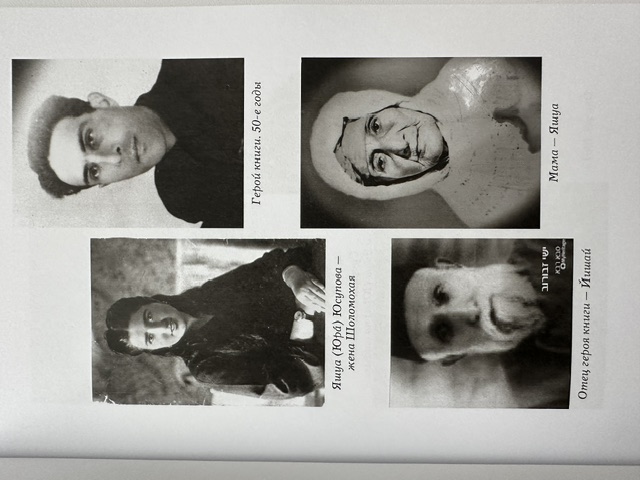
A great merit of the book is its documentary foundation. David Gai has carried out an enormous piece of research: he has studied archival materials, met with the hero's son Amnon (Alik), and gathered family testimonies. The publication is given particular value by the numerous photographs of Sholomokhai himself, his parents, his wife, his children, and other relatives. Thanks to them, behind the historical events the reader sees a living human being and his family.
The author writes that Sholomokhai was perhaps one of the very few Bukharian Jews with such a military biography. Most likely there were others as well, who passed through captivity, the camps, and the European Resistance. But many of these lives have yet to be uncovered and told. That is precisely why David Gai's book becomes not only a monument to one man, but also a call to continue the search for forgotten names.
This small book is read in a single breath. Behind its 130 pages stands the author's enormous labor, his deep respect for the document, and his sincere gratitude to the generation that bore on its shoulders the harshest trials of the twentieth century.
One wishes to believe that the book will find its readers. It deserves the attention not only of Bukharian Jews and their descendants, but of everyone to whom historical truth, human dignity, and the memory of those who, without loud words, performed their daily feat are dear.
When you close the last page, you realize that you have read not merely the story of one man. It is the story of an entire generation that conquered the war, but was not always able to conquer fear. Of people who saved the world, yet for many years lived in fear of their own biography.
I should very much like to acknowledge David and Arkady Kalantarov of Israel, who have worked for many years on the theme of "Bukharian Jews in the Second World War." They have researched and published a whole series of books on this subject. But, as has been said above, there are still many modest names — of the living and of the dead — that await their hour.
And now, perhaps, a word about David Gai's principal achievement: it lies in the fact that he has given back to one of these people his true name. Not Sharif. Not Sashka. But Sholomokhai Zavurov — a man worthy of remembrance. So long as we remember the names of such people, history remains alive. That is precisely why this book is not only about the past. It is about our memory, without which no future is possible.
Sholomokhai Zavurov, 1915–1986, is buried in the Jewish cemetery in Dushanbe.