"Cast thy bread upon the waters,
for thou shalt find it after many days."
King Solomon (Kohelet)
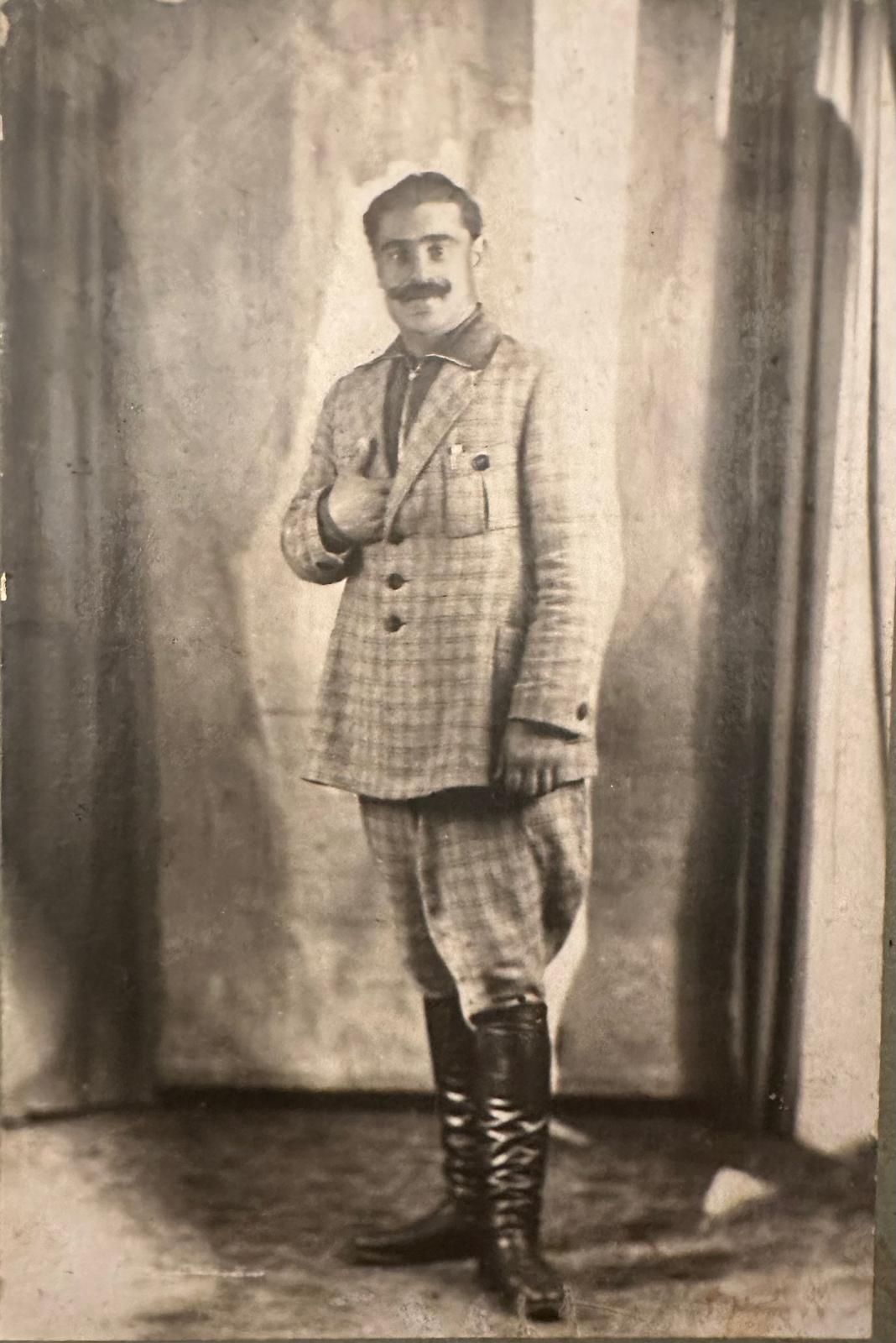
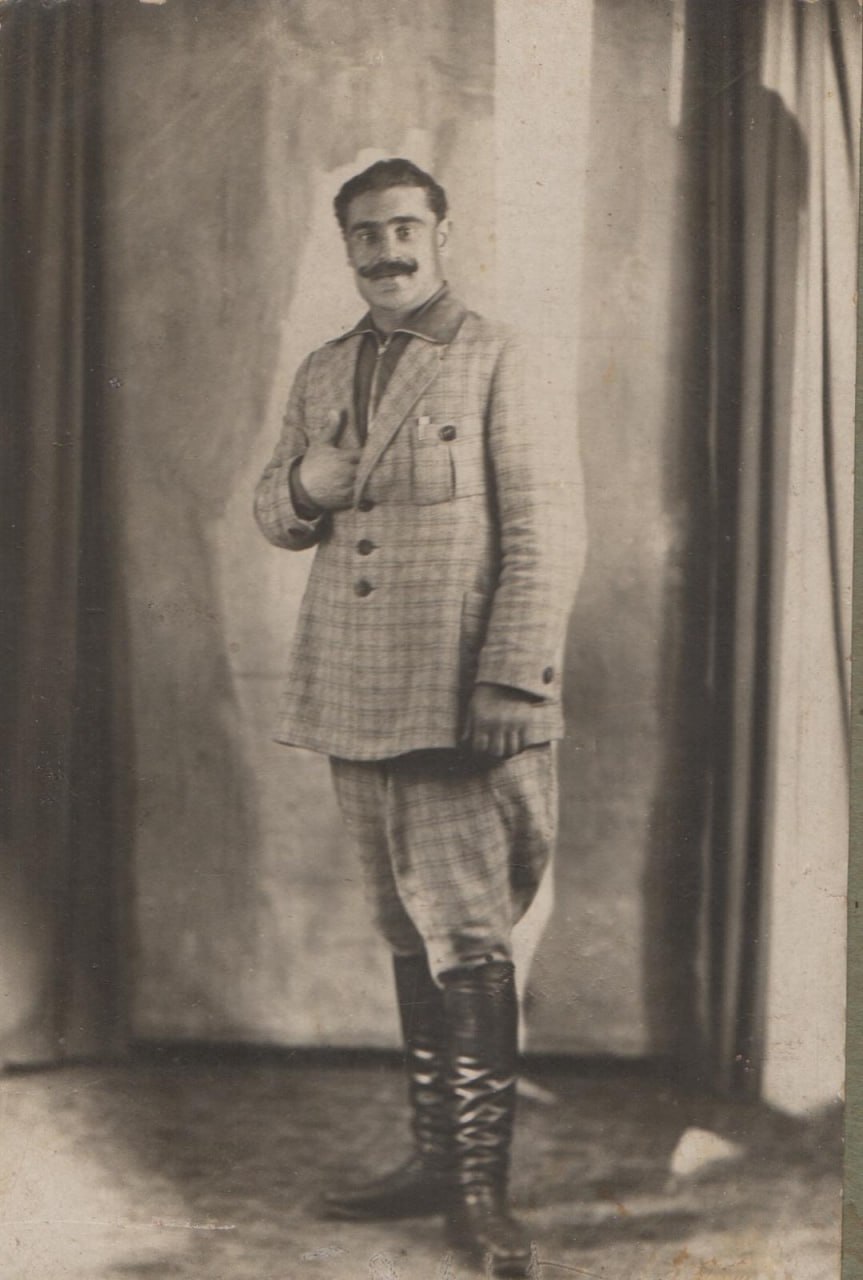
My father's story:
It was in the early nineteen-twenties. My younger brother Neriya and I saddled our horses, loaded them with khurjuns full of tea, and set off through the mountain passes to trade. From Samarkand — as it was still called then — to the Tajik village of Dushanbe.
Those were troubled times; bands of basmachi prowled the roads. But youth sometimes pushes a man into reckless acts. It seemed to us that the perils of the road would pass us by — after all, the God of our fathers was with us, and He is all-powerful.
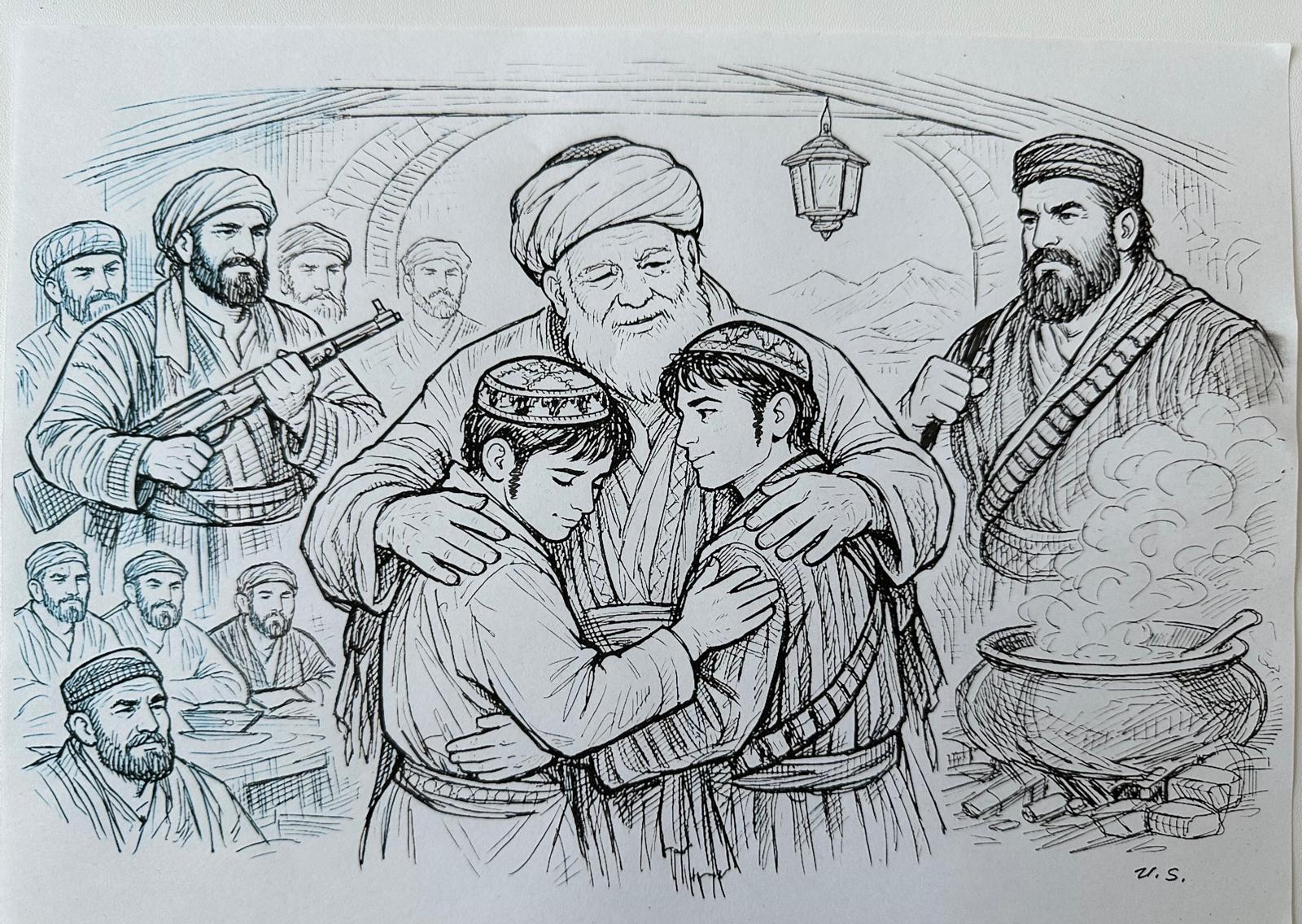
The night turned out to be moonlit. The star-strewn sky was unusually clear, and only the crunch of snow beneath the horses' hooves broke the extraordinary hush of the majestic mountains. My brother and I rode in silence, and then, down in the valley, a small settlement came into view. From makeshift chimneys carelessly stuck into the tiny windows of the mud-brick houses smoke was rising, and already we could hear the distant barking of yard dogs. Suddenly two bearded horsemen appeared before us, turbans on their heads and warm striped robes on their shoulders. In the moonlight one could clearly make out the machine-gun belts, heavy with cartridges, slung across their chests. They levelled their rifles at us and ordered us to go wherever they should point.
Before long we found ourselves in front of a caravanserai standing on the road at the edge of the village. Around this medieval inn there were many horses and no fewer people bustling about them. Not far from the entrance, on makeshift stone supports — oshtans — steam was billowing from two great cauldrons. Evidently the cooks standing by the fire, their robes tucked up into their belts, were preparing plov. We were led inside, where there seemed to be even more people than outside, and beyond that one could see two adjoining rooms crammed to bursting with basmachi. The low, crooked ceiling, the stifling air, and the smoke of chilim and hashish did nothing to lift the spirits.
For a moment I grew afraid for my brother — he was only in his fifteenth year. When we appeared in the midst of this gathering, silence fell. A certain fellow came up to us, with a sparse little beard that looked like an old radish and a face pitted by smallpox. His narrow, mocking little eyes darted from me to my brother and back again. Now and then he glanced over at the men sprawled about the floor, and did so several times. At last, fixing his prickly gaze on me, he asked in Uzbek: "Who are you? Where from, and why are you travelling?" I was about to answer when Neriya suddenly said: "I feel stifled — may I take off my cap?" The moment he removed his hat, a terrible uproar broke out. At first I did not understand what was happening. Someone ran up and roughly tore my own cap off my head. Amid the shouting from the many-voiced crowd, one cry stood out especially: "Zhugutlardi tuttik" — we have caught Jews. What gave us away were the small side-locks at our temples and the finely embroidered dark-blue skullcaps that only Bukharian Jews wore in those days. In an instant the crowd was on its feet, and in that fearful roar the words could be heard: "Death to the Jews!"
The pock-marked one and several of his henchmen rushed about us, trying to hold the crowd back. Bloodshot eyes, faces twisted with hatred, breath reeking of hashish — all of it stayed in my memory forever, like a terrible dream. Suddenly several shots rang out, and the crowd froze in a stupor. The pock-marked one was holding a pistol. He bellowed at the top of his voice: "Yuzbashi, to me!" (the centurion). From the back rows, gripping a nagaika tightly in his fist, a tall fellow shouldered his way through — a man of heroic build with a beard as black as pitch. The two stepped aside and conferred about something. Seizing the moment, Neriya whispered: "Hanania, they are going to kill us — but luckily they haven't disarmed us yet, our knives are still on us; so let's take some of them with us to the other world." I stopped him: "Don't be rash. God is all-merciful; our father's prayers will not abandon us in trouble — we must not lose hope." Meanwhile I was thinking to myself: surely they are waiting for someone, otherwise they would have finished us off long ago. And I was not mistaken. After a short pause, everything that had been sitting sprawled and leaning about suddenly rose to its feet, as if under a gust of wind. All of them began bowing respectfully, turning to face the door. At the entrance the newly arrived men — bodyguards, apparently — were bustling about. Behind them appeared a short, spare man in a rich robe, with a snow-white beard and large, sorrowful eyes. For a second I caught myself thinking that this ancient old man was somehow different, unlike the rest. There was something kindly about his bearing — but the gravity of what was happening brought me back to reality.
I was deeply preoccupied with our situation, and in the back of my mind I was already weighing my brother's proposal.
The elder was led to the place of highest honour. Unhurriedly, he seated himself on a satin cushion. Before him they spread a costly cloth — a dastarkhan. Pressing one hand to his chest, and with the other passing the aksakal a cup of tea, the pock-marked one said: "We have caught Jews, and we were waiting for you before deciding to execute them. By then the plov will be ready as well." When the old man heard this news he started, and asked again: "Jews?" "Yes, Jews," came the puzzled reply. "Where? Where are they?" the old man asked in agitation, rising quickly to his feet. They pointed us out to him. The venerable aksakal, before the very eyes of the dumbstruck crowd, came up to us and embraced us like a father, then asked gently: "Where do you live, my sons?" "In Samarkand," I answered, at a loss. "But where, exactly?" the old man pressed on. "Near the royal garden" (Bogi Padishoh). Coming to myself, I said. And at once I resolved to say nothing more — why should they know where my loved ones lived? But the perceptive old man seemed to read my thoughts and said: "My boy, I understand your fear, and I want to assure you that here no one will do you harm." His gaze was kind and disarming, but I was very much on my guard; I wanted to believe him, only some inner voice kept saying: "Don't be too quick." It seemed the old man sensed this too. He placed a hand on my shoulder and continued softly: "Now, near the very royal garden, on the little rise, the second gate on the right down the lane was mine. Every spring an apple tree used to blossom over it. In that courtyard there lived a noble man — may Allah preserve him — his name was Baruch, and I wanted to ask you: is he alive? is he well?"
"The man whose name you have spoken is our late father, and the apple tree, indeed, blossoms above no gate in that row but ours." As I said these words with emotion, my mind was straining to run through all my father's friends and acquaintances — for from childhood he had taken me about with him and I knew many of them by sight. But this man I simply could not recall. Uneasiness gripped me once more. "So Baruch has died?" the old man said sadly. "And the children? Your brother and sister. I remember the boy well — his name, I think, was Tsion. And by the way, how is your mother? I hope she is still living?" he went on with concern.
"Father died a year ago; mother a year before him. Typhus carried her off — she was only thirty-eight.
The woman you have in mind was father's first wife; she died during one of the typhus epidemics, many years ago. Father often spoke of her, but unfortunately I don't remember exactly when she was buried. Malka is our sister — she is the eldest — and Tsion is our brother; they are father's children by his first wife."
The aksakal's manner convinced me that there was no longer any need to worry — the worst was behind us. Our forefathers' prayers had stood up for us. Meanwhile the old man stroked his handsome beard and, turning to the crowd, which was watching this scene in bewilderment, said: "Listen, true believers, Muslims — I want to tell you what happened to your spiritual leader nearly thirty years ago. These young orphaned dzhigits you have condemned to death were not yet in the world.
I had come to glorious Samarkand with a small herd of horses.
I needed to sell more than twenty steeds. At the market where livestock is traded, several middlemen offered me their services. But back in Fergana I had been recommended a broker from among the minority peoples, by the name of Babakhan — for so he was called among the Muslims. At the cattle yard he was not to be found; they told me he seldom came. So I sent a messenger. Before long a tall man walked into the teahouse, with an open, serious face. After talking with him I understood that before me stood a man who knew his trade. Over the course of a few days he helped me sell a number of horses well. One evening I fell ill; my head was spinning badly, I felt I could not stand. They laid me on a wooden platform in the teahouse and sent for a tabib. The healer said: 'It is typhus,' and quickly left. The people about me suddenly vanished all at once — probably frightened of my illness. That evening no one came into the teahouse. The night seemed to me endless; I lay entirely alone, burning with fever. Only at dawn, coming to my senses, did I see Babakhan. He had taken off his own robe and covered me with it. Giving me water, he asked anxiously: 'Why did you not send for me? But don't worry, we will get through this trouble.' Everything swam before my eyes. When I came round again, I realised that I was lying in Babakhan's home. My friends! I stayed with this noble man for several months. His wife knew medicinal herbs. I am grateful to that woman for having cared for me as though I were her own son. With little Tsion I became close friends — the boy would not leave my side for a step. Babakhan himself kept watch at my bedside through the nights. These good people set me on my feet, saved my life. And yet I was no relation of theirs, not even of the same faith. Later I asked this extraordinary man what had moved him — where did such nobility come from? He answered: 'My name is Baruch, I am a believing man, and I know that all people, regardless of race or faith, are children of the Almighty. In our holy book it is written: "Whoever saves a single life is as one who has saved the whole world."'
The time came for me to return home. After the farewell supper, Babakhan drew out of a chest a small bundle and unwrapped it — inside were many little pouches of money. He began to untie them and to set out gold coins in little stacks on the pieces of cloth. Each bore some sort of inscription. I watched with interest. When he had arranged them all, he turned to me: 'In this stack is the money for the raven-black horse sold to such-and-such a trader; in the second stack, the money for the black steed sold to such-and-such a merchant.' And so the money for every one of the horses he had sold lay before me. I said that he had saved my life and I would not take any money. I was a well-to-do man and wished to leave these gold coins with him as a token of my gratitude. But he replied: 'This money belongs to you and your family; if you truly wish to repay me, then pay me for the work the percentage we agreed upon.'"
The venerable elder seemed for a while to withdraw into himself; after a few seconds of silence he looked with a searching gaze at the yuzbashi and the pock-marked one, and then went on: "True believers, Muslims, in my place could have been any one of you — your father, perhaps a brother or son, cast into a foreign land. And I am certain that with anyone in trouble this man would have acted just as he acted with me. I was supposed to leave today for an important meeting, but evidently the hand of Providence has led me to you not by chance, and it was not by chance either that the meeting was cancelled. I want to ask you plainly: can one answer good with evil? Have we the right to execute these innocent young men?"
The affair ended happily: without haggling, they bought our entire stock. They assigned us two escorts, who saw us back to Samarkand, but before letting us go warned us not to show ourselves on the roads again.