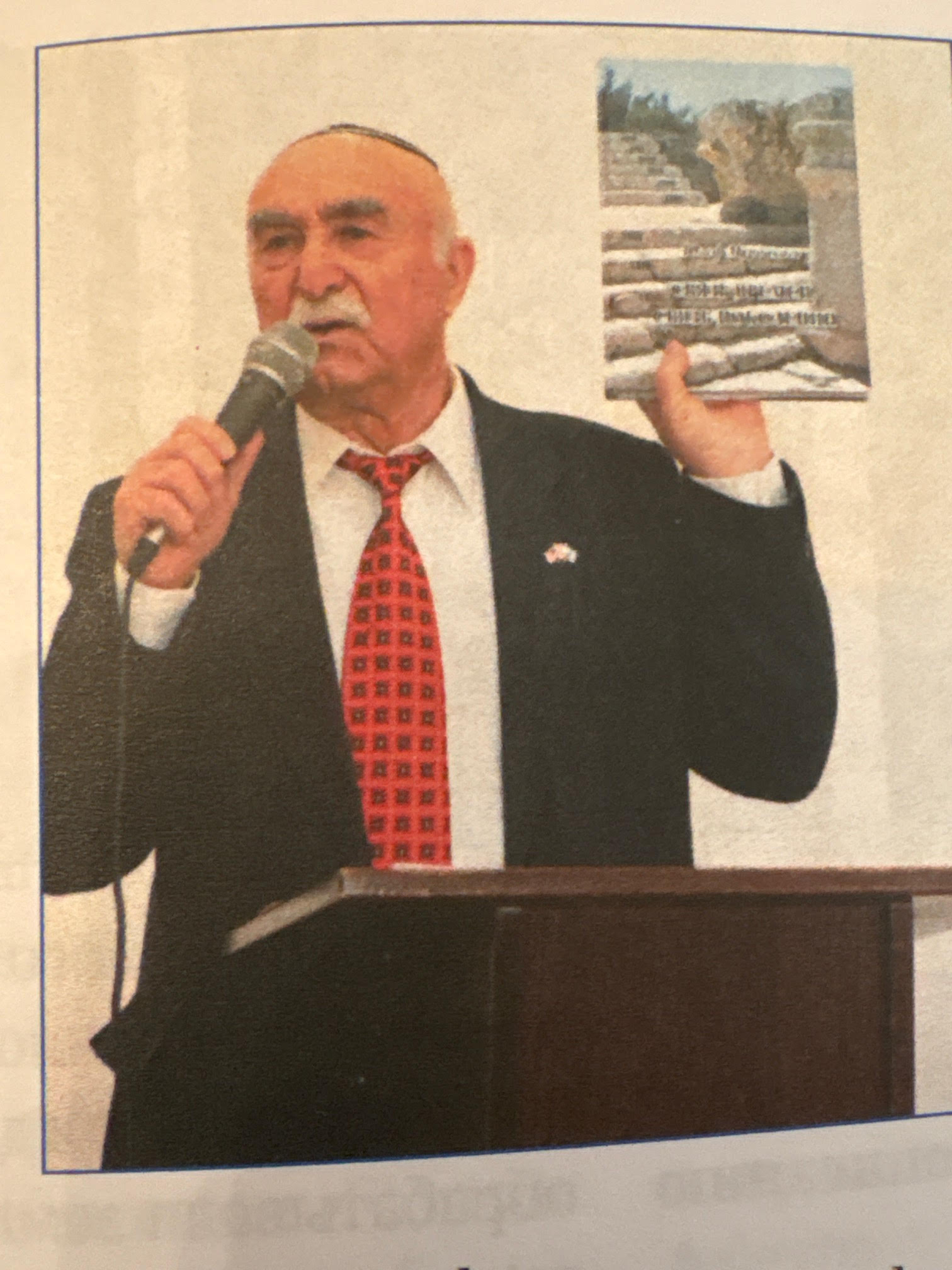
Recently a new book by the renowned scholar, researcher, writer, and public figure Yusef Murdakhaev, Through Thorns to Science, has seen the light of day. The very title reflects the author's life path — that of a man who had to overcome countless trials before winning recognition in science and leaving a distinct mark on the history of the Bukharian-Jewish community.
Yusef Murdakhaev's fate is unusual in many respects. He was born on March 17, 1935, not in Samarkand, Bukhara, or Tashkent, as were most members of our community, but in Baku, where for many decades a small yet active community of Bukharian Jews had existed. Later the family moved to Namangan, but even there young Yusef did not stay long. From his early years he strove for independence, always tried to follow his own path, and disliked being under anyone's guardianship.
The future scholar's childhood cannot be called an easy one. The Almighty sent him a difficult trial — an illness resembling sleepwalking. At certain times he could barely control his actions. Yet even this did not break his character.
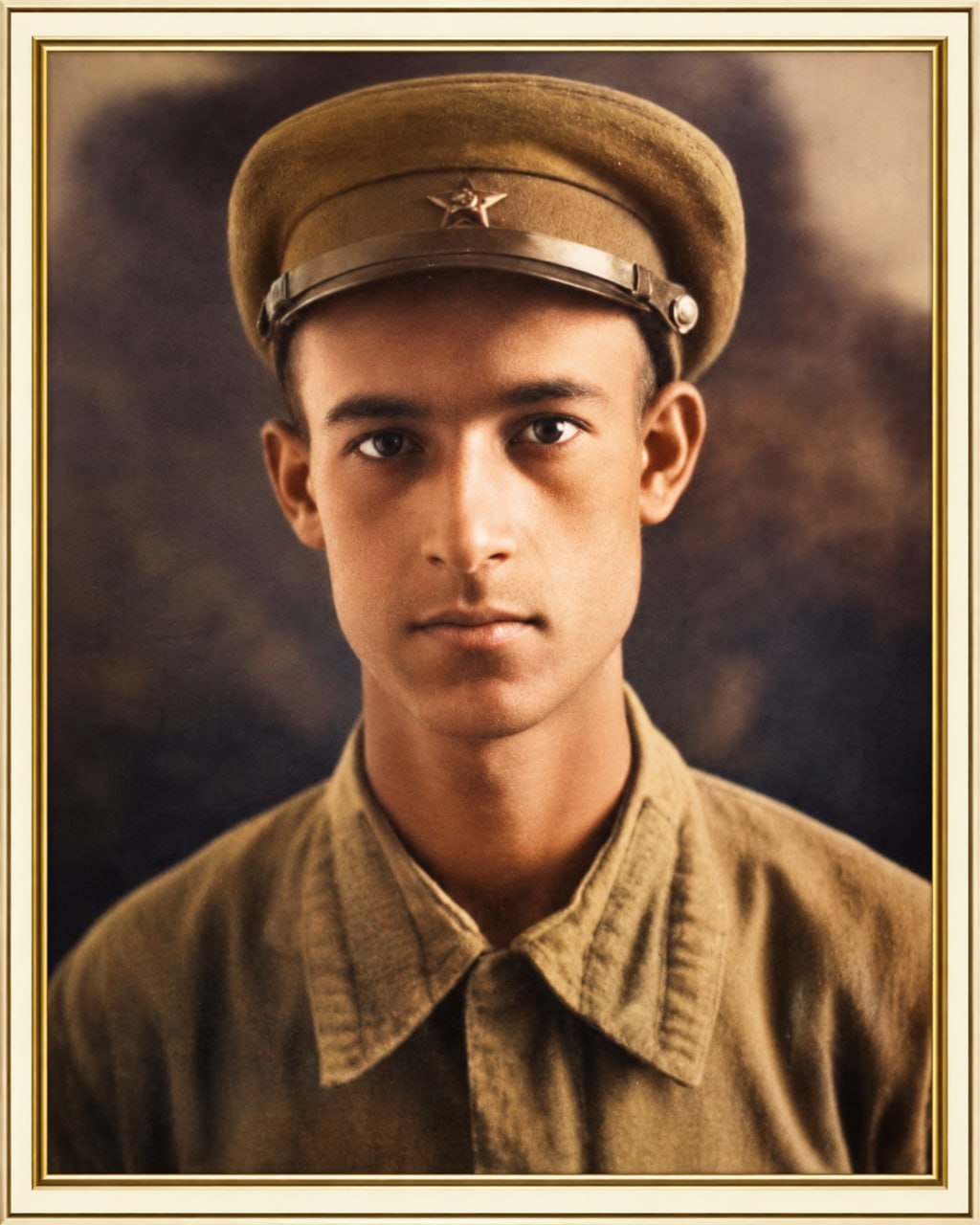
The war struck the family hard. In 1942 Yusef's father was called up to the front. Before being deployed, he completed training at the Tashkent Machine-Gun School and served in the active army until Victory itself. The war took a heavy toll on the future scholar's mother and grandmother, who had to shoulder all the family's cares.
Yusef's interest in nature and plants awakened while he was still a child. In the courtyard of the family home worked an experienced dehkan who had planted a great variety of plants. It was these that became the first objects of observation and study for the inquisitive boy. In time this childhood fascination grew into his life's work. After receiving a higher education in biology, Yusef Murdakhaev devoted himself to scientific research. He paid special attention to medicinal plants and their healing properties.
In 1993, at the Institute of Botany in Tashkent, he successfully defended his doctoral dissertation. The work was based on the study of more than five hundred species of medicinal plants. This many years of scientific labor opened new possibilities for using natural resources in medicine and agriculture.
Yusef Murdakhaev's scientific achievements are reflected in numerous publications. A special place among them is held by his fundamental work The Cultivation of Medicinal Plants in Uzbekistan. Other books followed, among them The Eastern Bazaar: Medicines and Spices (2001), Nicknames of the Jews (2002), The Genealogical Tree of Moshe Maskovi, and many other studies.
In 1997 Yusef Murdakhaev emigrated to New York. It was then that I had the chance to meet him in person.
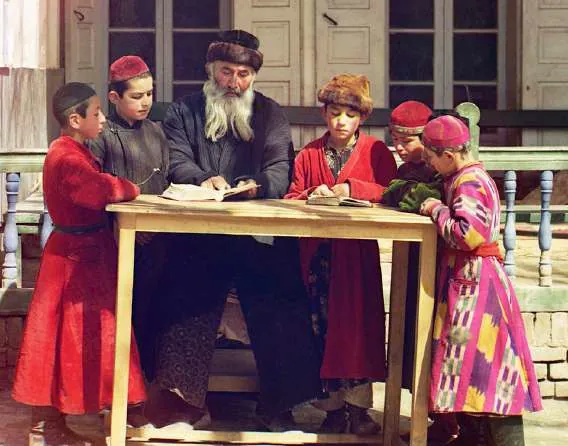
A special place in the author's work is occupied by the history of the Bukharian Jews. For many years he gathered materials, examined family archives, and recorded the reminiscences of the older generation. In his books he has repeatedly emphasized that only in emigration have the Bukharian Jews gained the opportunity to freely write their own history and to preserve their religion, culture, and traditions.
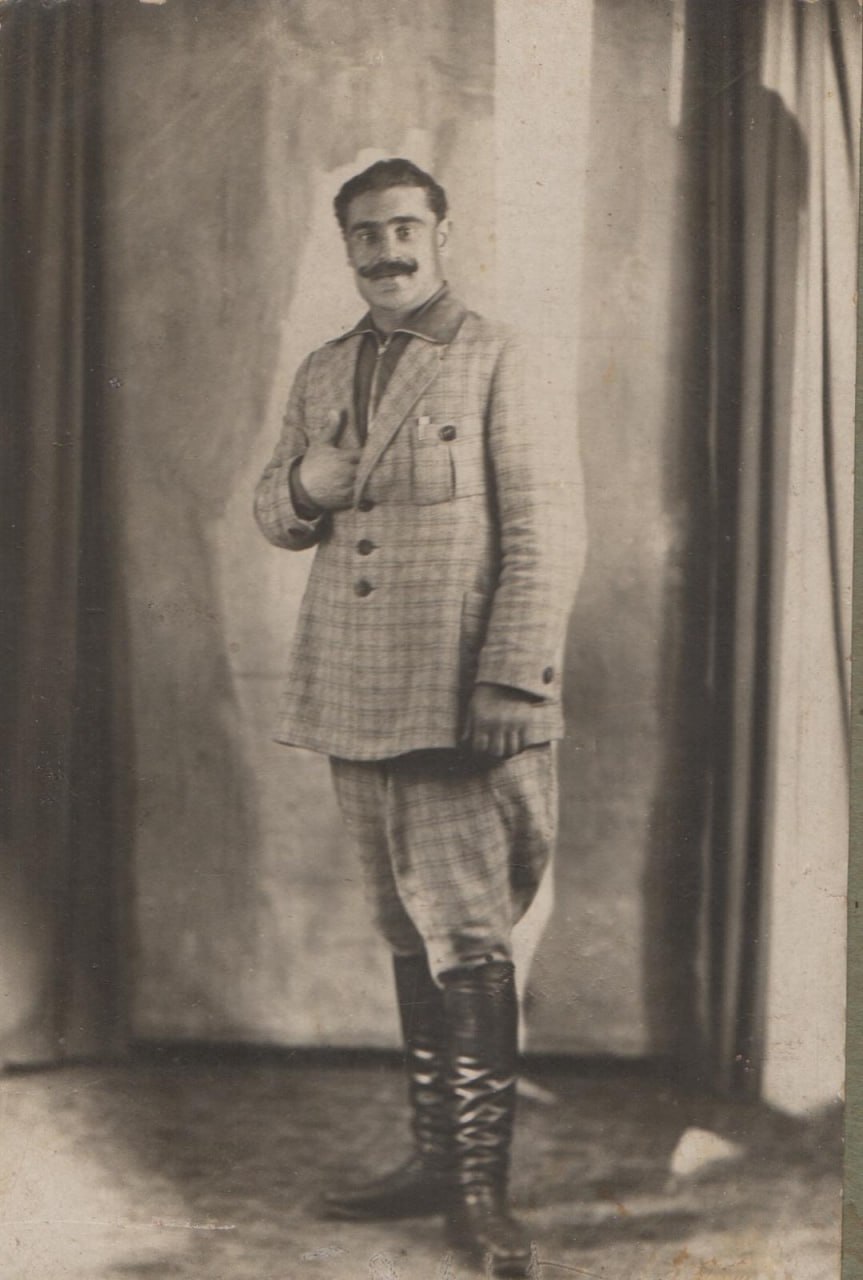
With gratitude Yusef Murdakhaev recalls Dr. Robert Pinkhasov, who back in 1992 founded the public-scientific association "Roshnoi," which played an important role in the development of the intellectual life of the Bukharian-Jewish community. In one of the chapters of the new book, the author writes about his parents, who raised five sons. They always taught their children to achieve everything through their own labor, but sadly did not live to see the fruits of their sons' successes.
Especially moving are the words of gratitude to his wife, Margarita: "This work of mine, which may well be my last, is a tribute of gratitude to my beloved wife Margarita. It was she who stood beside me on the difficult path into science."
The new book is striking in its scope — nearly four hundred pages. It has been published simultaneously in two languages, Russian and English. The author is well aware that the younger generation is gradually losing the Russian language, and so he seeks to make his works accessible to the widest possible circle of readers.
The pages of the book describe in detail every stage of his life — from childhood and the fate of his brothers to his scientific work, emigration, and public activity. It brings together memoirs, articles, notes, speeches, documents, and materials that are of value not only to the author's family but to the entire community.
Since 2020 Yusef Murdakhaev has served as scientific consultant to the journal Healthy Way of Life, where his articles on medicinal plants appear regularly. In 2021 he was elected a people's academician of the "Turon" Academy of Sciences of Uzbekistan. As a scholar and researcher, he has repeatedly spoken at international conferences, including forums of Bukharian-Jewish scholars in Vienna and other cities around the world.
Recently, at the Bukharian Jewish Community Center of New York, a ceremonial evening was held to mark Yusef Murdakhaev's 90th birthday. On the tables were displayed the books he had written, and on the walls hung paintings created by his own hand. For many of the guests it came as a discovery that the well-known scholar is also a gifted artist.
But the most unexpected moment of the evening was his performance on the violin. When Yusef took up one of the most difficult musical instruments and played several pieces, the hall fell literally still with admiration.
Looking at this man, one cannot help but grasp how generously the Almighty has endowed him with talents. Scholar, researcher, writer, artist, musician — all these qualities have come together, remarkably, in a single person.
Through Thorns to Science is not merely the autobiography of an outstanding scholar. It is the chronicle of an entire era, the history of a family, a community, and a people who have managed to preserve their traditions and culture in the most varied corners of the world.