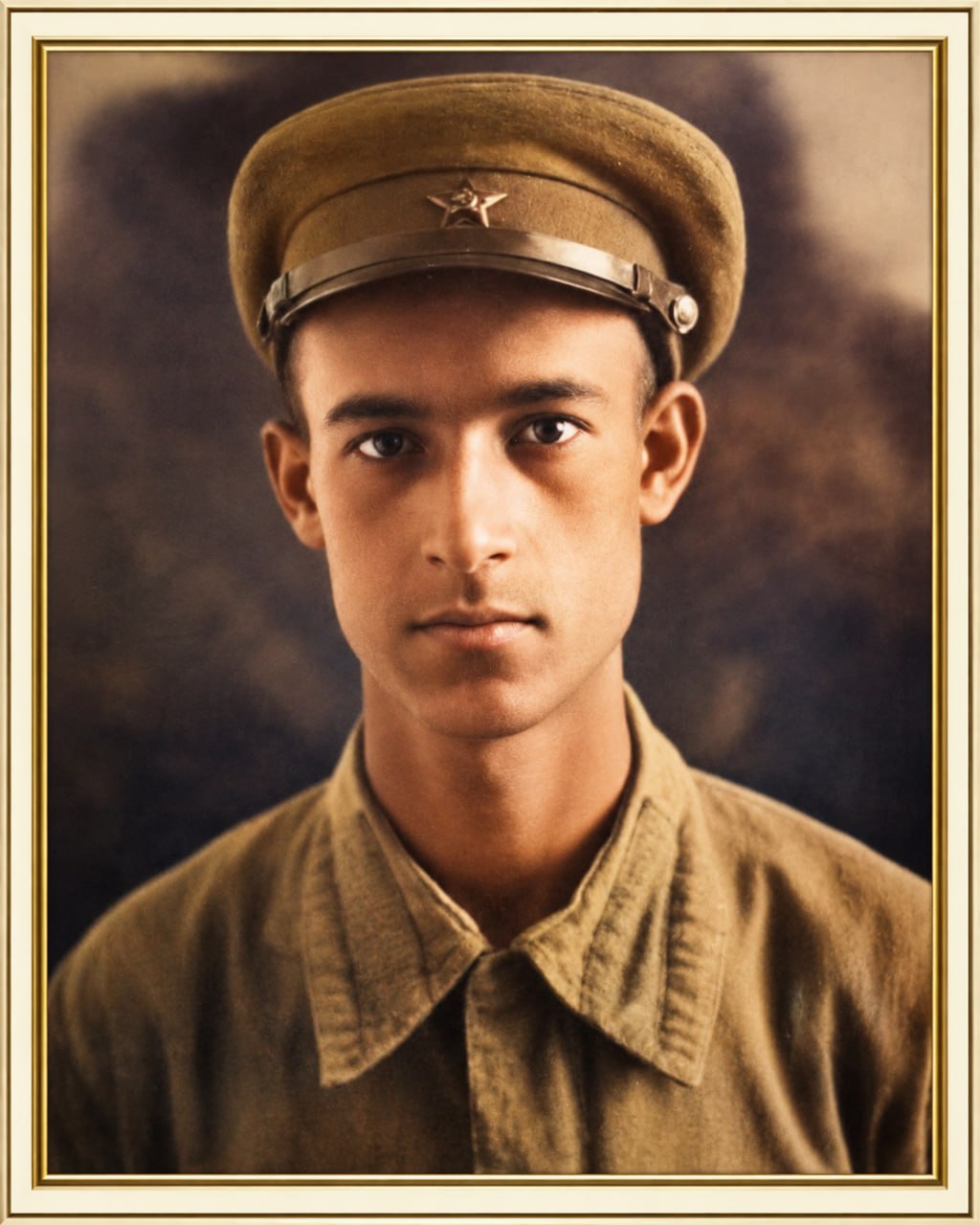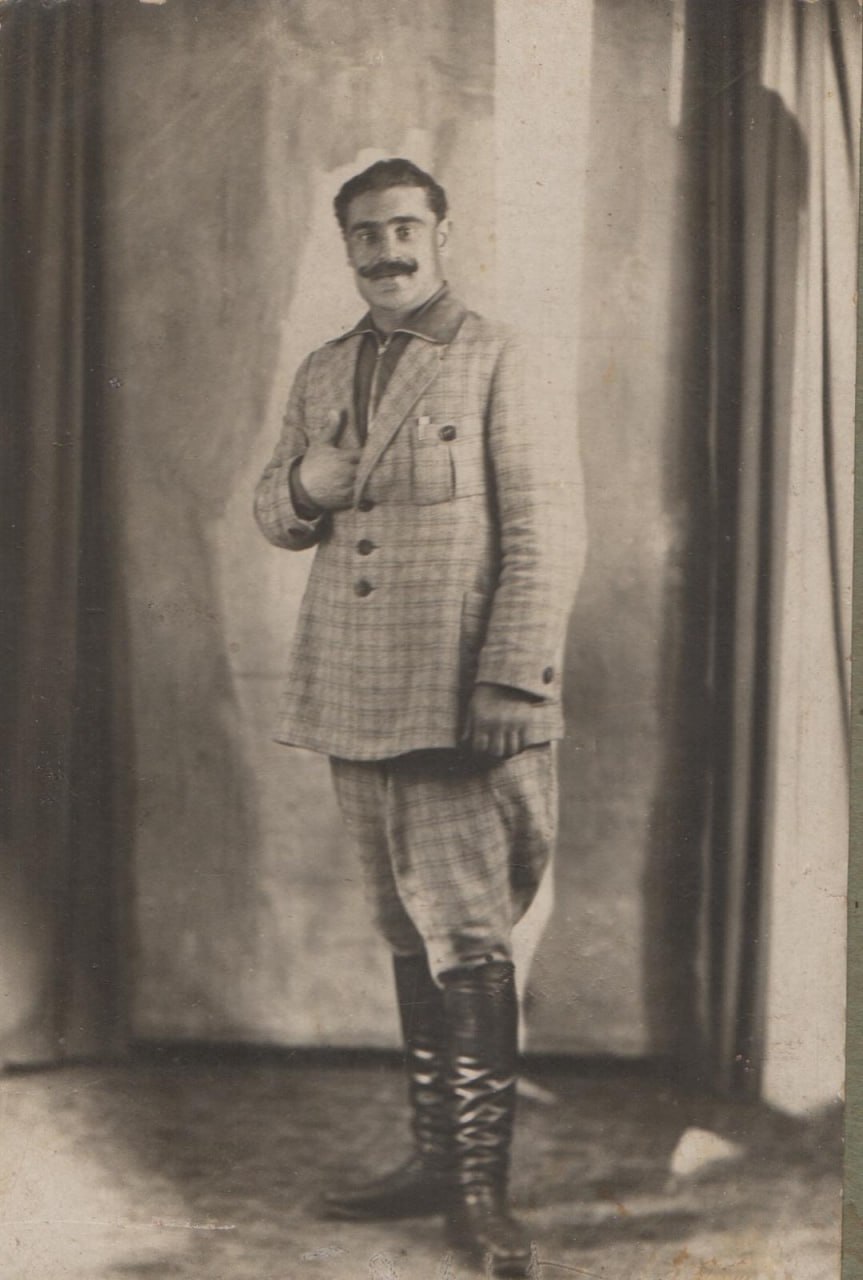
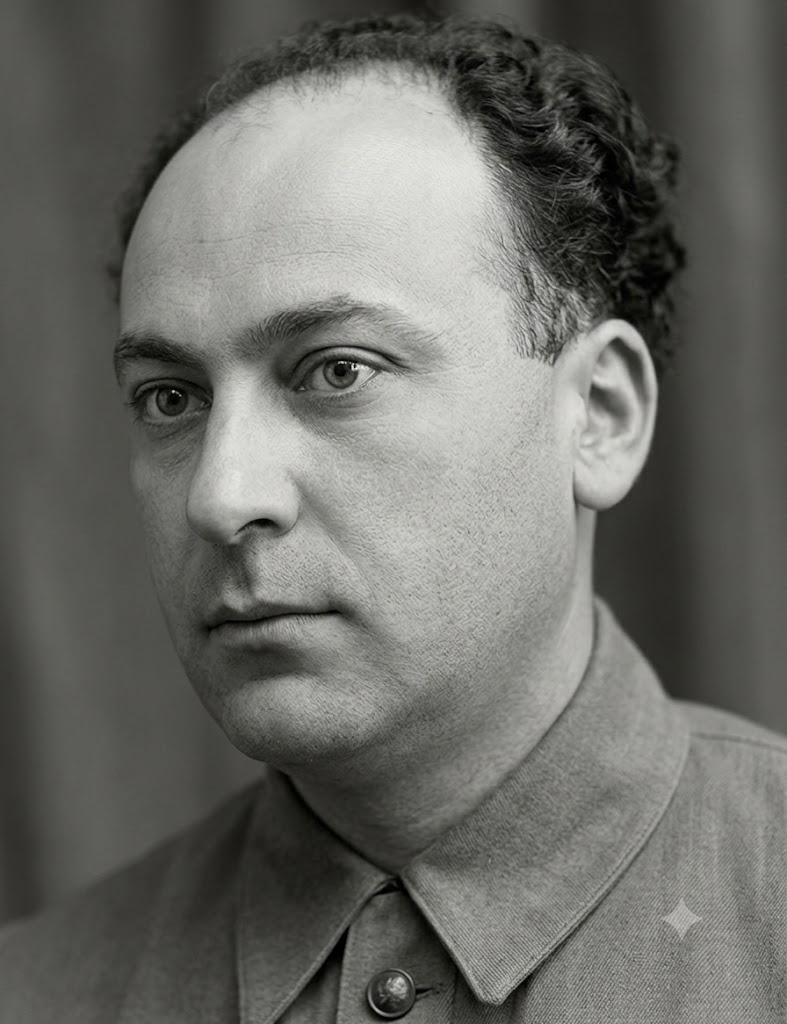
Aron Saidov (1902–1954)
Aron was born in Samarkand into the family of a tailor named Ribi and his wife Khevsi. Like many children of his time, he studied at the homlo (khonai mullo) and received a traditional Jewish education. From early childhood Aron was taught the value of hard work. At sixteen he took up a position in a workshop that made and repaired shoes.
Genuinely believing in the promise of revolutionary change, Aron hoped to see a new and better life built for his people. It was a period when many young men and women threw themselves into political organizations. Aron was elected secretary of the Komsomol committee in the Jewish quarter known as "Vostok."
In 1924 he was admitted to the Communist Party and recommended for the post of instructor in the agitation-and-propaganda department for work with national minorities at the Central Committee of the Bolshevik Communist Party of Uzbekistan. At the same time he served as executive secretary of the Jewish section of the regional party committee.
In 1927 Aron Saidov traveled to Moscow to study at the Communist University of the Toilers of the East. Two years later he was sent back to Samarkand to head the editorial board of the newspaper Roshnoi, which had been publishing since 1925 and was printed in the Hebrew script. In 1927 the republics of Central Asia began a sweeping transition to the Latin alphabet. In 1930 Roshnoi was renamed Bayroki Mikhnat and moved to Tashkent, now printed in Latin characters. From that point on, A. Saidov lived and worked in Tashkent.
Aron Saidov took part in establishing the journal Khayoti Mikhnat — later renamed Adabiyoti Soveti — and was appointed its editor-in-chief. In 1934 he became one of the driving forces behind the publication of the first literary almanac of Bukharian-Jewish writers.
Until all print publications were shut down in 1940, the newspaper and journal were home to talented poets and journalists: Mordechai Bachaev, Yakhiel Akilov, Itzhak Mavashev, Yunatan Kuraev, Yakub Khaimov, Menashe Aminov, and others. The pages covered events at home and abroad, addressed questions of family life and the upbringing of youth, and raised the concerns of Bukharian-Jewish collective farms, cultural institutions, schools, and more.
Aron Saidov served on the plenum of the Samarkand City Soviet (1923–1927) and the Tashkent City Soviet (1933–1935). After completing his studies at the Higher School of Propagandists in Moscow (1936–1937), he was confirmed as an instructor in the press department of the Central Committee of the Communist Party of Uzbekistan. He was twice elected a deputy to the legislature — the Central Executive Committee of Uzbekistan (TsIK).
A. Saidov was active in KOMZET (the Committee for the Settlement of Jewish Toilers on the Land) and in the founding of Bukharian-Jewish collective farms. He commanded enormous respect not only among Bukharian Jews but among people of many other nationalities. The leaders of the Uzbek party and government — Yu. Akhunbabaev, U. Yusupov, F. Khodjaev — held him in high regard.
During the years of Stalin's Great Terror, many writers, teachers, and members of the Bukharian-Jewish intelligentsia were arrested. Aron Saidov was among them. A year later, in 1939, he was exonerated. He subsequently became director of the publishing house for the newspapers Pravda Vostoka and Kizil Uzbekistan.
Aron Saidov made an immense contribution to the education and culture of his people and did a great deal for the development of literature and the arts in Uzbekistan. For his selfless labor he was recognized on numerous occasions with certificates of honor from the Presidium of the TsIK of Uzbekistan and with an honorary commendation from the Supreme Soviet of Uzbekistan.
Aron Saidov was married to Zinaida, daughter of the merchant Abo Abramov. Together they had four daughters: Rena, Roza, Zoya, and Sofya. All the children received a higher education and carried on their father's path with distinction.
Aron Saidov died at the age of fifty-one. He is buried at the Chigatai Cemetery in Tashkent. In 1973, one of the streets of Tashkent was named in his honor.
Vladimir Aulov